
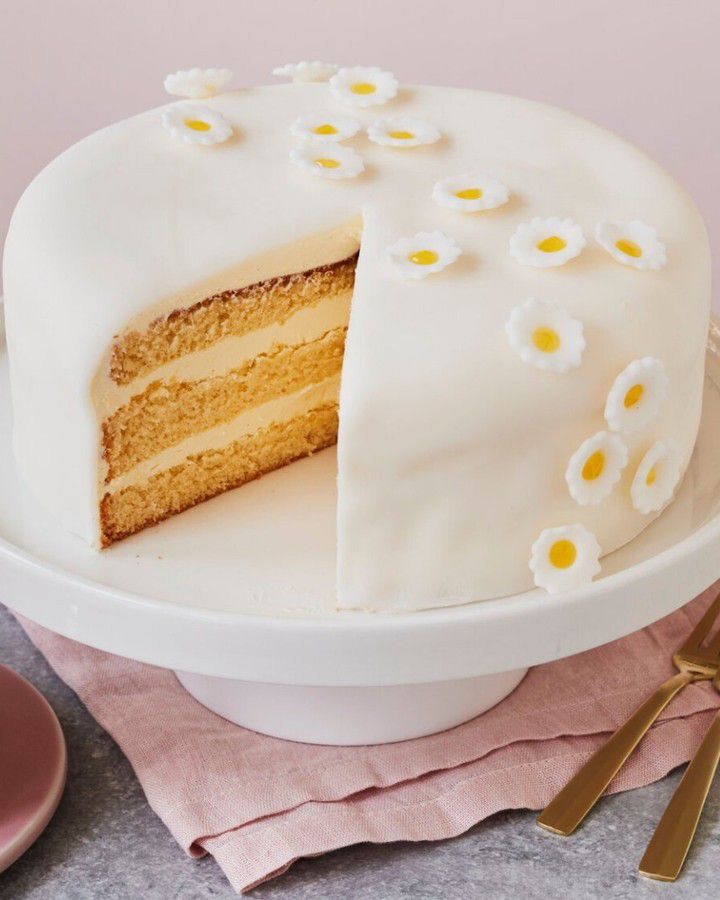
There’s something magical about slicing into a cake that looks like it came straight out of a royal bakery—smooth, snow-white, and gleaming with elegance. I still remember the first time I made a Delicious Buttercream Fondant Cake Delight for my daughter’s birthday. She squealed when she saw it, and my neighbor actually asked if a professional had made it! Spoiler: it was just me, a springform pan, and a whole lot of love (plus this foolproof recipe). Whether it’s for a baptism, wedding, or just because it’s Tuesday, this cake turns any occasion into a celebration.
The Story Behind the Delicious Buttercream Fondant Cake Delight
This cake blends old-school European baking with modern decorating flair. The almond sponge base? That’s a classic German or Austrian touch—light, nutty, and moist without needing syrup. The silky buttercream, enriched with vanilla pudding, mimics the custard fillings found in traditional Central European tortes. Then comes the fondant—the glossy, smooth finish that took the cake world by storm in the early 2000s and never left. I first saw it on a wedding cake in Vienna, and I’ve been obsessed ever since. Over the years, I’ve tweaked it to be less fussy, more forgiving, and just as stunning.
Why You’ll Absolutely Love This Recipe
This Delicious Buttercream Fondant Cake Delight isn’t just pretty—it tastes incredible. The sponge is tender with a delicate almond fragrance, the buttercream is rich but not overly sweet, and the fondant adds that satisfying, slightly chewy outer layer we all secretly peel off first (don’t deny it!). Best of all? It’s simpler than it looks. No fancy pastry school degree needed—just patience and a willingness to get a little powdered sugar on your counter (or sweater… or ceiling… we’ve all been there).
Perfect Occasions for Your Buttercream Fondant Cake
Here’s the truth: this cake steals the show. Use it for:
- Birthday parties (kids and adults go wild for it)
- Baptisms or baby showers (paint it pastel with edible colors)
- Anniversaries or weddings (elegant and timeless)
- Graduations or retirements (add gold leaf or custom sugar scripts)
- Just-because-I-love-you moments (because you deserve it)
Seriously, it’s the cake that says, “You matter.”
Ingredients for Your Delicious Buttercream Fondant Cake Delight
For the Buttercream
- 200 g butter, softened
- 60 g sugar
- 1 packet (about 40 g) vanilla pudding powder
- 400 ml milk
For the Cake Sponge
- 5 large eggs (room temperature)
- 180 g sugar
- 1 pinch of salt
- 100 g blanched ground almonds
- 70 g wheat flour (Type 405 or all-purpose)
For Assembly & Decoration
- 450 g white fondant
- Cornstarch (for dusting work surface)
- Yellow sugar script (optional, for elegant lettering)
Easy Ingredient Swaps
No ground almonds? Use finely ground walnuts or hazelnuts—but toast them first for extra aroma!
Allergic to dairy? Swap butter for plant-based margarine and milk for oat or soy milk (just make sure your pudding powder is dairy-free too).
Don’t have Type 405 flour? All-purpose flour works just fine.
And if you can’t find ready-made fondant, you can make marshmallow fondant at home—it’s sticky but doable!
Step-by-Step Preparation
Step 1: Make the Dreamy Buttercream
Start by cutting your butter into small cubes and letting it soften at room temperature—it should give slightly when you press it, not melt. In a separate bowl, whisk together sugar, vanilla pudding powder, and about 5 tablespoons of milk until smooth. This prevents lumps! Pour the remaining milk into a small saucepan and bring it just to a simmer. Remove from heat, then whisk in the pudding mixture. Return to low heat and cook for 1 full minute, stirring constantly, until thickened like custard. Immediately pour into a clean bowl, press plastic wrap directly onto the surface (this stops that yucky skin from forming!), and let it cool completely. Trust me—rushing this step leads to greasy buttercream. Pro tip: Pop it in the fridge for 20 minutes if you’re in a hurry, but bring it back to room temp before mixing!
Step 2: Bake the Almond Sponge Cake
Preheat your oven to 180°C (350°F) for conventional or 160°C (320°F) for fan-assisted. Grease only the bottom of a 20 cm (8-inch) springform pan—no sides! This helps the cake rise evenly. In a large bowl, beat eggs, sugar, and salt with an electric mixer on high for a full 4 minutes. You’ll know it’s ready when the mixture is thick, pale, and leaves a ribbon trail when you lift the beaters. Gently fold in the ground almonds and flour using a spatula—overmixing here makes the cake dense. The batter should be airy and cloud-like. Pour it into your pan and smooth the top with a knife.
Step 3: Bake, Cool, and Slice into Layers
Bake for about 40 minutes, or until a toothpick inserted in the center comes out clean. The cake will be golden on top and spring back when lightly pressed. Let it cool in the pan for 10 minutes, then transfer to a wire rack to cool completely—this can take 1–2 hours. Once cold, use a long serrated knife to slice the cake horizontally into three even layers. I like to place toothpicks around the edge as guides so I don’t wobble. Place the first layer on your cake stand or plate. Chef’s tip: Chill the cake for 30 minutes before slicing—it’s way easier to cut cleanly when cold!
Step 4: Assemble and Frost Like a Pro
Beat your room-temperature butter with a hand mixer on high for 2 minutes until it’s fluffy and almost white. Add the cooled pudding mixture a spoonful at a time, mixing well after each addition. Once fully combined, your buttercream should be silky and hold its shape. Set aside about ¼ of it for piping decorations later. Spread a generous layer of buttercream on your first cake layer, top with the second layer, repeat, then add the final layer. Crumb coat the whole cake (a thin layer to trap crumbs), chill for 15 minutes, then apply a second, thicker layer. Smooth it with a bench scraper for that Instagram-worthy finish. Now you’re ready for fondant!
Timing at a Glance
- Prep time: 45 minutes
- Cooking time: 40 minutes
- Cooling & setting time: 2–3 hours
- Fondant application: 30–45 minutes
- Total time: About 4 hours (mostly hands-off!)
Chef’s Secret for Flawless Fondant
Before rolling out your fondant, knead it gently for 2–3 minutes until soft and pliable—it’s like playdough for adults! Dust your counter and rolling pin with cornstarch (not powdered sugar—it can make fondant sticky). Roll it into a circle at least 4 inches wider than your cake diameter. Drape it over the cake, then smooth from the top down using a fondant smoother or your hands. Trim excess at the base with a sharp knife. For that bakery shine, brush lightly with vodka or edible luster dust mixed with lemon extract!
Fun Fact About This Cake
Did you know? The trick of using vanilla pudding in buttercream was born in post-war Germany when fresh cream was scarce but pantry staples like milk powder and pudding mixes were plentiful. Smart grandmas turned necessity into luxury—and we’re still benefiting from their genius today!
Necessary Equipment
- 20 cm (8-inch) springform pan
- Electric hand mixer or stand mixer
- Serrated knife (for slicing layers)
- Cake turntable (optional but helpful)
- Bench scraper or offset spatula
- Rolling pin
- Piping bags and tips (for decorations)
How to Store Your Buttercream Fondant Cake
This cake is best enjoyed within 2–3 days. Keep it covered at cool room temperature (below 22°C/72°F) in a cake dome or airtight container. Fondant acts like a seal, keeping moisture in—but heat and humidity are its enemies. In warm climates, store it in the fridge, but bring it to room temperature 1–2 hours before serving. Cold fondant gets hard, and nobody wants to bite into a sugary hockey puck!
Avoid direct sunlight or near the stove—fondant melts faster than ice cream in July. If you must refrigerate, wrap the cake loosely in plastic after the fondant has set (about 1 hour) to prevent condensation from forming beads on the surface.
Can you freeze it? Yes—but only the unfrosted, un-fondanted sponge layers. Wrap them tightly in plastic and foil, then freeze for up to 2 months. Thaw overnight in the fridge, then bring to room temp before filling and decorating. Never freeze a fully decorated fondant cake—it weeps and cracks upon thawing.
Tips and Advice for Cake Success
- Always use room-temperature eggs for maximum volume in your sponge.
- Weigh your ingredients—baking is science, not guesswork!
- If your buttercream looks curdled, keep mixing. It usually comes back together.
- Color fondant with gel food coloring (not liquid—it thins the fondant).
- Practice smoothing techniques on a dummy cake first if you’re nervous!
Presentation Ideas That Wow
- Top with edible gold leaf for weddings
- Press dried edible flowers along the base
- Use yellow sugar script to write “Happy Birthday” or initials
- Add a textured pattern with a fondant impression mat
- Place on a mirrored cake stand for instant glam
- Dust with edible pearl shimmer for a dewy finish
Healthier Alternatives to Try
Want to lighten things up without losing flavor? Try these spins on the classic:
- Almond Flour Only Sponge: Skip the wheat flour entirely and use 170 g almond flour. The cake will be denser but gluten-free and rich in healthy fats.
- Coconut Buttercream: Replace half the butter with refined coconut oil and use coconut milk instead of dairy milk. Pairs beautifully with tropical fondant decor.
- Maple-Sweetened Version: Swap sugar for maple syrup in the sponge (reduce milk slightly) and use maple pudding powder if available.
- Vegan Fondant Cake: Use flax eggs (1 tbsp ground flax + 3 tbsp water per egg), plant-based butter, and vegan fondant (check labels—many contain gelatin).
- Protein-Packed Layers: Add 2 tbsp unflavored whey or pea protein to the dry ingredients—just don’t overmix!
- Reduced-Sugar Fondant: Look for “low-sugar” fondant brands or make your own with marshmallows and less powdered sugar.
Common Mistakes to Avoid
Mistake 1: Warm Buttercream Meets Cold Cake
If your buttercream is warm or your cake is fridge-cold, the fondant will slide right off—or worse, melt into a sad puddle. Always let both components reach room temperature before assembly. Cold cake condenses moisture, and warm buttercream can’t hold structure. Pro tip: If your kitchen is hot, chill the crumb-coated cake for 20 minutes before the final frost—it sets the base perfectly.
Mistake 2: Overmixing the Sponge Batter
Once you add flour and almonds, stop the mixer! Fold by hand with a spatula in gentle motions. Overmixing develops gluten, which makes your delicate almond cake tough and rubbery. You want it to melt in your mouth, not bounce back like a tennis ball.
Mistake 3: Skipping the Crumb Coat
That first thin layer of buttercream isn’t optional—it traps all the loose crumbs so your final coat stays pristine. Without it, your fondant will pick up brown specks and look messy. Let the crumb coat firm up in the fridge for 15 minutes before adding the final layer.
Mistake 4: Rolling Fondant Too Thin
Fondant should be about 1/8 inch (3–4 mm) thick. Too thin, and it tears when you drape it. Too thick, and it looks bulky and hard to eat. Roll evenly from the center outward, rotating the fondant as you go for consistent thickness.
Mistake 5: Using Liquid Food Coloring
Liquid colors water down fondant, making it sticky and hard to handle. Always use gel or paste food coloring—they’re concentrated and won’t alter texture. Start with a toothpick dab; you can always add more!
Frequently Asked Questions
Can I make this cake ahead of time?
Absolutely! Bake and fill the cake layers up to 2 days ahead. Keep them covered at room temperature. Apply fondant the day before serving—fondant keeps the cake fresh but shouldn’t sit longer than 48 hours or it may dry out slightly.
Why is my buttercream grainy?
Graininess usually means your pudding wasn’t fully cooled or your butter was too cold. Both cause the fat to seize. Always bring pudding and butter to the same room temperature before mixing. If it’s still grainy, keep beating—it often smooths out after 3–5 minutes.
Does fondant taste good?
Most store-bought fondant has a mild, slightly sweet vanilla flavor—but it’s not the star. Its job is to look stunning and protect the cake. If you dislike the taste, roll it as thin as possible or use marshmallow fondant, which many find tastier.
Can I use a different cake base?
Yes! A vanilla or chocolate sponge works, but keep it dense enough to support fondant. Avoid super-light chiffon cakes—they collapse under fondant’s weight. My tip: stick to recipes labeled “layer cake” for best results.
How do I prevent fondant from cracking?
Knead it well before rolling—it should feel like soft clay. Work quickly in a low-humidity environment. If it starts drying, lightly rub a tiny bit of shortening on surface cracks and smooth gently.
What if my cake layers are uneven?
Use a cake leveler or serrated knife with steady hands. Place the cake on a turntable if you have one. If layers slope, flip one upside down—the flat bottom becomes your new top!
Can I color the buttercream?
Yes! Use gel food coloring to tint your buttercream before assembly. Pastel layers look gorgeous when you slice into the cake. Just avoid adding too much—it can thin the cream.
Is this cake suitable for beginners?
With patience, yes! The sponge is forgiving, and the pudding buttercream is more stable than American buttercream. Fondant takes practice, but even imperfect coverage looks elegant. Start simple—smooth sides, no fancy details.
How much does this cake serve?
A 20 cm (8-inch) three-layer cake serves 12–16 people with standard slices. For weddings, you can cut thinner pieces and serve up to 24 guests.
Can I add fruit filling?
Lightly! A thin layer of seedless raspberry or apricot jam between layers adds flavor—but too much moisture softens the cake and risks fondant sliding. Always seal fruit fillings with a buttercream “dam” around the edge.
Final Slice of Wisdom
Making a Delicious Buttercream Fondant Cake Delight isn’t about perfection—it’s about joy. The slightly wobbly layers, the smudged fondant edge, the sugar script that spells “Hapy Birtday”—those are the marks of love. So preheat your oven, dust your counter, and remember: every great baker started with a lopsided first cake. Yours might just be the one that makes someone’s eyes light up. And isn’t that why we bake?
Delicious Buttercream Fondant Cake Delight
Ingredients
Equipment
Method
- Start by cutting your butter into small cubes and letting it soften at room temperature.
- Whisk together sugar, vanilla pudding powder, and about 5 tablespoons of milk until smooth in a separate bowl.
- In a small saucepan, bring the remaining milk to a simmer, then whisk in the pudding mixture and cook for 1 minute until thickened.
- Pour the mixture into a clean bowl, press plastic wrap against the surface, and let it cool completely.
- Preheat your oven to 180°C (350°F) for conventional or 160°C (320°F) for fan-assisted.
- Grease only the bottom of a 20 cm (8-inch) springform pan.
- In a large bowl, beat eggs, sugar, and salt with an electric mixer on high for 4 minutes until thick and pale.
- Gently fold in the ground almonds and flour using a spatula without overmixing.
- Pour the batter into the prepared pan and smooth the top.
- Bake for about 40 minutes until a toothpick comes out clean.
- Let the cake cool in the pan for 10 minutes, then transfer to a wire rack to cool completely (1–2 hours).
- Once cold, slice the cake horizontally into three even layers with a serrated knife.
- Beat your room-temperature butter with a mixer on high for 2 minutes until fluffy and pale.
- Gradually add the cooled pudding mixture, mixing after each addition until silky.
- Set aside ¼ of the buttercream for piping later, then spread a generous layer on the first cake layer.
- Stack the second layer on top, repeat with buttercream, and add the final layer.
- Apply a crumb coat (thin layer of buttercream) and refrigerate for 15 minutes.
- After chilling, add a thicker layer of buttercream and smooth it with a bench scraper.
- Knead the fondant until pliable, then roll it out to a thickness of about 1/8 inch, dusting with cornstarch.
- Drape the rolled fondant over the cake and smooth it down.
- Trim excess fondant at the base with a sharp knife.