
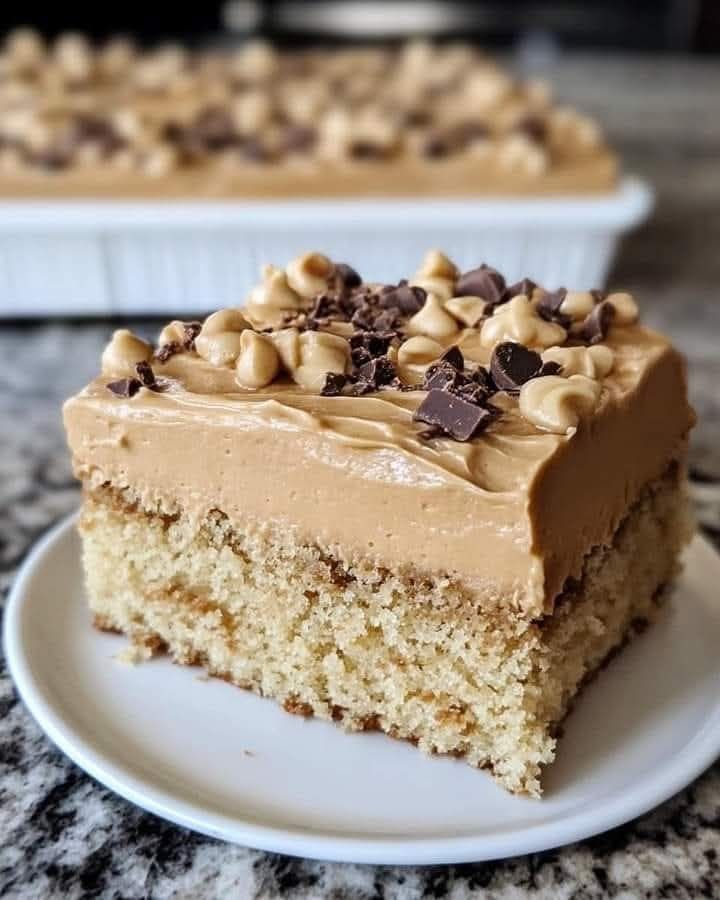
There’s something magical about peanut butter that makes everything taste like a hug from your childhood—especially when it’s swirled into a moist, fluffy cake and smothered in a frosting so creamy, you’ll want to eat it with a spoon. I first baked this Irresistible Peanut Butter Sheet Cake for my daughter’s birthday when she was six. She’d begged for “peanut butter EVERYTHING,” and I thought, “Why not?” One bite later, and the whole family was hooked. Now, it’s our go-to dessert for potlucks, lazy Sundays, and those “I need comfort” evenings. And guess what? It’s ridiculously easy to make—no fancy skills required!
The Sweet Story Behind Peanut Butter Sheet Cake
Sheet cakes have been a staple in American homes since the early 20th century, thanks to their simplicity, crowd-pleasing size, and minimal cleanup. Peanut butter entered the dessert scene in the 1920s and 30s when it became a pantry favorite during the Great Depression—it was affordable, shelf-stable, and packed with protein. Over time, home bakers got creative, folding it into cookies, pies, and yes, cakes! This particular peanut butter sheet cake with peanut butter frosting is a modern twist on that legacy—rich, nostalgic, and just sweet enough without overwhelming your taste buds. My version? A little extra love (and a little extra peanut butter) goes a long way.
Why You’ll Absolutely Love This Recipe
Let’s be real—life’s too short for boring desserts. This Irresistible Peanut Butter Sheet Cake delivers deep peanut butter flavor in every bite, with a tender crumb that melts in your mouth. The best part? It comes together in one bowl, bakes in under 25 minutes, and gets frosted while still warm—so it sets up perfectly without needing to chill for hours. Plus, it feeds a crowd (24 slices!), so it’s perfect when you want to impress without breaking a sweat. And if you’ve ever dreamed of cake that tastes like a Reese’s cup? You’ve just found your soulmate.
Perfect Occasions for This Peanut Butter Dream
- Birthday parties (kids AND adults go wild for it)
- BBQs and backyard gatherings
- Office potlucks (it travels beautifully)
- “Just because” weekend treats
- Game day dessert (score a touchdown with this one!)
Ingredients You’ll Need
- 1 cup unsalted butter
- 2 large eggs
- 1/2 cup buttermilk
- 1/4 cup creamy peanut butter (for the cake)
- 1 teaspoon baking soda
- 3 cups powdered sugar
- 1 teaspoon vanilla extract
- 2 cups granulated sugar
- 2 cups all-purpose flour
- 1/2 teaspoon salt
- 1 cup water
- 1/2 cup whole milk (for the frosting)
- 1/4 cup creamy peanut butter (for the frosting)
- 1/2 cup unsalted butter (for the frosting)
Easy Ingredient Swaps
No buttermilk? Mix 1/2 cup milk with 1½ teaspoons lemon juice or vinegar and let it sit 5 minutes. Out of whole milk? Use 2% or even oat milk—it’ll still be delicious. If you only have natural peanut butter (the oily kind), give it a good stir first, but keep in mind it might make the frosting softer. For a gluten-free version, swap in a 1:1 gluten-free flour blend. And if you’re watching sugar, you *can* reduce the powdered sugar slightly—but don’t go below 2½ cups, or your frosting won’t set right.
How to Make Your Irresistible Peanut Butter Sheet Cake
Step 1
Preheat your oven to 350°F (175°C) and grease a 15x10x1-inch jelly roll pan or rimmed baking sheet. I like to line it with parchment paper too—just in case—so the cake slides out like a dream. This pan size gives you that perfect, even layer: not too thick, not too thin. Pro tip: Don’t skip greasing! Peanut butter batter can be sticky, and we want every slice to stay intact.
Step 2
In a large mixing bowl, whisk together the dry ingredients: 2 cups all-purpose flour, 2 cups granulated sugar, 1 teaspoon baking soda, and 1/2 teaspoon salt. The sugar actually helps keep the cake tender, not just sweet. Make sure there are no lumps—smooth = even baking. This dry mix smells like potential dessert, and I swear my dog always appears at this point, hoping for “accidental” spills.
Step 3
Grab a medium saucepan and add 1 cup water, 1 cup unsalted butter, and 1/4 cup creamy peanut butter. Heat over medium-high, stirring constantly, until the butter melts and the mixture just starts to bubble—about 3–4 minutes. You’ll smell that rich, nutty aroma filling your kitchen, and your heart might skip a beat. Don’t walk away! Butter burns fast, and we want it hot but not browned.
Step 4
Pour that warm, fragrant liquid straight into your dry ingredients. Stir with a wooden spoon or spatula until everything’s combined—it’ll look thick and glossy, like peanut butter cookie dough batter. Don’t worry if it’s a bit lumpy at first; keep mixing. The heat helps activate the baking soda, giving your cake that perfect rise. This is the moment the magic begins!
Step 5
Now, add 1/2 cup buttermilk, 2 large eggs, and 1 teaspoon vanilla extract. Mix until the batter is smooth, silky, and free of streaks. You’ll notice the color deepen to a warm beige, and the texture becomes pourable but still substantial. Beat it just until combined—overmixing can make the cake tough. And yes, I always sneak a tiny taste here. For quality control. Obviously.
Step 6
Pour the batter into your prepared pan and gently tilt or spread it with a spatula so it’s even from edge to edge. Pop it into the oven for 18–22 minutes. You’ll know it’s done when the top springs back when lightly touched, and a toothpick inserted in the center comes out clean (or with a few moist crumbs—no wet batter!). Pro tip: Oven temps vary, so start checking at 18 minutes. Nobody likes a dry peanut butter cake!
Step 7
While the cake bakes, make the frosting. In a small saucepan, melt 1/2 cup unsalted butter and 1/4 cup creamy peanut butter over low heat. Stir until smooth and fragrant—again, don’t let it brown. Then whisk in 1/2 cup whole milk and 1 teaspoon vanilla extract. The mixture should be warm and fluid, like liquid silk. This warm base helps the powdered sugar dissolve perfectly, so your frosting is lump-free.
Step 8
Gradually add 3 cups of powdered sugar, one cup at a time, whisking constantly. Keep going until the frosting is thick, creamy, and glossy—like soft-serve ice cream. If it seems too thick, add a splash of milk. Too thin? A little more powdered sugar. You’re the boss! The key is smoothness, because nobody wants gritty frosting on their dream cake.
Step 9
As soon as the cake comes out of the oven, spread the warm frosting evenly over the hot surface. It will melt slightly, then set into a velvety blanket as the cake cools. Let it rest for 20–30 minutes before slicing—this lets the frosting firm up just enough to hold its shape. Cutting too soon? You’ll get frosting soup. Trust me, I’ve been there.
Timing Breakdown
- Prep time: 15 minutes
- Cook time: 20 minutes
- Cooling time: 25 minutes
- Total time: 60 minutes
Chef’s Secret for the Best Peanut Butter Cake
Here’s my golden rule: **Always use fresh baking soda**. Old baking soda won’t give you that lift, and your cake will turn out dense instead of light. To test it, drop a pinch into vinegar—if it bubbles like crazy, you’re good. Also, don’t skip the buttermilk! It adds tang and tenderness that regular milk can’t match. And for extra peanut punch? Sprinkle chopped honey-roasted peanuts on top after frosting—it adds crunch and flavor drama.
Fun Peanut Butter Fact
Did you know Americans eat an average of **680 peanut butter sandwiches** in their lifetime? That’s a lot of love for a legume! Peanut butter was actually promoted as a high-protein meat substitute in the early 1900s. Today, it’s a dessert superstar—and this peanut butter sheet cake with peanut butter frosting proves it deserves that spotlight.
What You’ll Need to Bake This Cake
- 15x10x1-inch rimmed baking sheet (jelly roll pan)
- Large mixing bowl
- Medium saucepan
- Small saucepan
- Whisk and wooden spoon or silicone spatula
- Measuring cups and spoons
- Parchment paper (optional but helpful)
- Cooling rack
How to Store Your Peanut Butter Sheet Cake
This cake keeps beautifully at room temperature for up to 2 days. Just cover it tightly with plastic wrap or place it in an airtight container. The frosting acts like a seal, keeping the cake moist underneath. I’ve left mine on the counter overnight, and it was just as delicious the next morning—maybe even better, as the flavors meld.
For longer storage, refrigerate it for up to 5 days. The cool temperature firms up the frosting, giving each slice a satisfying structure. Bring it to room temperature before serving, though—cold cake dulls the peanut butter flavor. I take mine out 30 minutes before guests arrive, and it’s always a hit.
You can also freeze the whole cake (unfrosted or frosted) for up to 3 months. Wrap it tightly in plastic, then foil, and thaw overnight in the fridge. If frosted, let it come to room temp before serving. Freezing doesn’t hurt the texture—in fact, my sister swears the frozen-and-thawed version tastes “extra peanutty.”
Pro Tips for Peanut Butter Perfection
- Use room-temperature eggs—they mix in more evenly.
- Don’t overbake! Peanut butter cakes dry out faster than vanilla ones.
- Stir your peanut butter jar well before measuring—oil separation ruins measurements.
- For a richer cake, swap 1/4 cup of flour for cocoa powder (hello, peanut butter-chocolate combo!).
How to Serve It Like a Pro
- Cut into neat squares and stack them on a vintage cake stand.
- Drizzle with melted chocolate and a sprinkle of flaky sea salt.
- Serve with a scoop of vanilla ice cream for an à la mode twist.
- Garnish with crushed peanuts or peanut butter cups for extra flair.
- Pair with cold milk or strong coffee—it balances the sweetness perfectly.
Healthier or Creative Variations
Want to mix things up? Here are six fun twists on the classic Irresistible Peanut Butter Sheet Cake:
- Banana-Peanut Butter Sheet Cake: Add 1 cup mashed ripe banana to the batter. It adds natural sweetness and moisture—plus, kids love it!
- Gluten-Free Peanut Butter Cake: Swap all-purpose flour for a quality 1:1 gluten-free blend. Keep everything else the same!
- Chocolate Swirl Version: Swirl 1/2 cup melted chocolate into the batter before baking. Marbled magic!
- Protein-Packed Frosting: Replace 1 cup powdered sugar with vanilla protein powder (adjust milk as needed). Great for post-workout treats!
- Vegan Peanut Butter Cake: Use plant-based butter, flax eggs (2 tbsp ground flax + 6 tbsp water), almond milk + vinegar (for buttermilk), and dairy-free peanut butter.
- Mini Sheet Cakes: Bake in a 9×13 pan for thicker slices, or divide into muffin tins for cupcakes—just reduce baking time to 15–18 minutes.
Common Mistakes to Avoid
Mistake 1: Using Natural Peanut Butter Without Adjusting
Natural peanut butter (with oil on top) has a looser texture and less sugar, which can make your cake greasy or your frosting runny. If you must use it, stir it extremely well and consider reducing the butter in the frosting by 1–2 tablespoons. Better yet, stick with a standard creamy peanut butter like Jif or Skippy—they’re formulated for baking consistency. Pro tip: Check the label—“no-stir” varieties work best.
Mistake 2: Overbaking the Cake
Peanut butter cakes bake faster than you think! Because of the fat content, they can go from perfect to dry in just 2 extra minutes. Always start checking at 18 minutes, and never rely solely on time—use the toothpick test. If the edges look golden but the center jiggles slightly, it’s likely done; residual heat will finish the job. Set a timer, but keep an eye on it like a hawk.
Mistake 3: Adding Frosting to a Cold Cake
This recipe is designed for **warm frosting on a warm cake**. If you wait for the cake to cool completely, the frosting will sit on top like a stiff blanket instead of soaking in slightly and creating that signature melt-in-your-mouth texture. The heat helps the frosting set smoothly. So don’t walk away after baking—have your frosting ready to go! If you accidentally cool the cake, gently rewarm the frosting before spreading.
Mistake 4: Skipping the Buttermilk
Buttermilk isn’t just a fancy ingredient—it’s essential for tenderness and a slight tang that balances the sweetness. Subbing regular milk makes the cake denser and less flavorful. If you don’t have buttermilk, make your own with milk and lemon juice (as noted earlier). Don’t skip this step unless you want a tougher crumb. Trust the process—your taste buds will thank you.
Mistake 5: Undermixing the Batter
It’s tempting to stop mixing as soon as you see no dry streaks, but peanut butter batter needs a little extra love to become smooth. Lumps of flour or sugar will bake into hard spots. Mix for a full 30–45 seconds after adding wet ingredients. But don’t go overboard—once smooth, stop. Overmixing develops gluten, and nobody wants a chewy peanut butter cake!
Frequently Asked Questions
Can I make this cake ahead of time?
Absolutely! You can bake and frost it the night before. Store it covered at room temperature, and it’ll taste even better the next day as the flavors deepen. Just avoid refrigerating unless it’s hot in your kitchen—cold temps mute the peanut butter flavor. I’ve made it on Friday for Sunday gatherings, and it’s always perfect.
Can I use crunchy peanut butter instead?
You *can*, but it changes the texture. Crunchy peanut butter adds little bits that can make the cake less uniform and the frosting grainy. If you love texture, try it—but I recommend sticking with creamy for the smoothest result. If you do use crunchy, blend the frosting briefly with an immersion blender to smooth it out.
Why is my frosting too runny?
Runny frosting usually means your butter-peanut butter mixture was too hot when you added the powdered sugar, or you didn’t add enough sugar. Always let the melted mix cool for 2–3 minutes before adding powdered sugar. And measure your powdered sugar with a spoon—don’t scoop! Scooping packs it down, so you end up with less than you think. Add sugar gradually until it reaches a thick, spreadable consistency.
Can I double the recipe?
Yes, but you’ll need two 15×10 pans or a full-size sheet pan (18×26). Don’t just double it in one pan—the batter will be too deep and won’t bake evenly. Also, make sure your oven can handle both pans at once; rotate them halfway through if needed. I once tried doubling in one pan… let’s just say we had cake soup.
Is this cake nut-free?
No—it’s packed with peanut butter, which is a legume but still a common allergen. If you need a nut-free dessert, this isn’t the one. However, sunflower seed butter can sometimes work as a substitute, though it has a stronger flavor and may turn green when baked (harmless but odd-looking). Always check with guests about allergies before serving.
Can I freeze leftovers?
Yes! Wrap individual slices or the whole cake tightly in plastic wrap, then foil. Freeze for up to 3 months. Thaw in the fridge overnight, then bring to room temperature before serving. The texture holds up surprisingly well. I always freeze a square or two “for emergencies”—you know, like bad days or surprise guests.
What kind of pan should I use?
A 15x10x1-inch rimmed baking sheet (also called a jelly roll pan) is ideal. Don’t use a 9×13 pan unless you adjust the recipe—this batter is designed for a thinner layer that bakes quickly. A deeper pan means longer bake time and possible undercooked centers. If you only have a 9×13, halve the recipe or expect to bake it 30–35 minutes.
Can I reduce the sugar?
You can slightly reduce the granulated sugar in the cake (try 1¾ cups), but don’t cut the powdered sugar in the frosting below 2½ cups—it won’t set properly. Sugar isn’t just for sweetness; it affects texture and structure. I tested a low-sugar version once, and it turned out dry and pale. Sometimes, you just gotta embrace the decadence!
Why did my cake sink in the middle?
Sinking usually means the cake wasn’t fully baked, or the oven door was opened too early. Peanut butter cakes are delicate when hot. Wait until a toothpick comes out clean and the edges pull away slightly from the pan. Also, check your baking soda—it could be expired. Fresh leavening = even rise.
Can I make this without eggs?
Yes! Substitute each egg with ¼ cup unsweetened applesauce or a flax egg (1 tbsp ground flax + 3 tbsp water, per egg). The cake will be slightly denser but still moist and delicious. I’ve made it with flax eggs for a vegan friend, and she said it was “scarily good.” Just don’t skip the buttermilk substitute—it’s key for lift.
Final Slice of Advice
This Irresistible Peanut Butter Sheet Cake isn’t just dessert—it’s joy on a plate. It’s the kind of treat that makes people ask for the recipe, that disappears fast at parties, and that turns ordinary days into something special. Whether you’re baking for family, friends, or just yourself (no judgment here!), you’re giving a gift of comfort and flavor. So grab your mixing bowl, channel your inner peanut butter fan, and bake up a little happiness. And when someone takes that first bite? Watch their eyes light up. That’s the real magic. Happy baking!
Irresistible Peanut Butter Sheet Cake
Ingredients
Equipment
Method
- Preheat your oven to 350°F (175°C) and grease a 15x10x1-inch jelly roll pan.
- In a large mixing bowl, whisk together the dry ingredients: flour, granulated sugar, baking soda, and salt.
- In a medium saucepan, combine water, unsalted butter, and creamy peanut butter; heat over medium-high until melted and bubbling.
- Pour the warm mixture into the dry ingredients and stir until combined.
- Add buttermilk, eggs, and vanilla extract; mix until smooth.
- Pour the batter into the prepared pan and spread it evenly.
- Bake for 18–22 minutes or until a toothpick comes out clean.
- While the cake bakes, melt unsalted butter and creamy peanut butter for the frosting in a small saucepan over low heat.
- Whisk in whole milk and vanilla extract until smooth, then gradually mix in powdered sugar until thick and creamy.
- Spread the warm frosting over the cake immediately after it comes out of the oven and let it rest before slicing.